
What Makes Authentic Nuad Thai Massage Unique

A traditional Thai massage can surprise first-time guests. There may be no oil, no spa table, and far less passive lying still than expected. Instead, the therapist works with the whole body through steady pressure, mindful movement, and supported stretches that can feel both grounding and energising.
Known in Thailand as Nuad Thai, this practice has deep cultural roots. UNESCO recognised Nuad Thai as part of the Intangible Cultural Heritage of Humanity in 2019, acknowledging it as a living tradition passed through training, touch, and careful observation.
For anyone curious about trying it, the experience is less like a typical relaxation massage and more like a quiet, guided conversation with the body.

Nuad Thai is performed with the whole body
Many Western-style massages focus mainly on the therapist’s hands. Authentic Thai massage uses a wider range of contact, including palms, thumbs, forearms, elbows, knees, and sometimes feet. This allows the therapist to apply pressure in a controlled way without relying only on finger strength.
That full-body approach changes the rhythm of the treatment. Pressure is often slow and sustained. The therapist may lean in with body weight, then gently release. This creates a rocking, wave-like pattern rather than quick kneading.
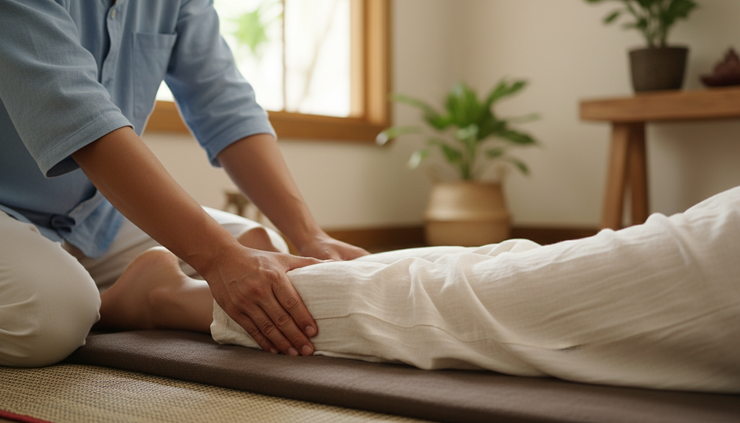
The client usually remains clothed in loose, comfortable garments. The session often takes place on a firm mat on the floor, giving the therapist space to move around the body and guide larger stretches safely.
This is one reason Thai massage can feel so distinctive. It is physical, but not rushed. It asks the body to soften gradually.
It blends pressure with assisted stretching
One of the clearest differences is the use of assisted stretches. A Thai massage may include movements that resemble yoga postures, except the therapist does most of the guiding. The client does not need to know yoga or be especially flexible.
The stretches vary depending on the person, the therapist’s training, and the style of session. They may involve:
Gentle spinal twists
Hip-opening movements
Shoulder and chest stretches
Leg stretches for the hamstrings and calves
Supported back bends or side bends
These movements are usually paired with pressure along the muscles and soft tissues. The aim is to help the body feel more open, mobile, and balanced.
A good therapist will adjust each stretch to the individual. Authentic Nuad Thai is not about forcing a dramatic pose. It is about finding the right level of sensation, where the body can respond without bracing.

The work follows energy lines known as sen
Thai massage is traditionally based on pathways called sen lines. These lines are often described as channels through which energy moves through the body. In Thai healing traditions, working along these lines helps restore flow and balance.
From a modern wellness perspective, many of the same areas correspond with muscles, tendons, fascia, and common points of tension. The therapist may press along the legs, back, arms, hands, feet, and shoulders in a deliberate sequence.
This is where the practice becomes more than a collection of stretches. The session has a map. It moves with intention.
That said, energy line theory should be understood as part of a traditional healing framework, not as a medical claim. Thai massage may support relaxation and body awareness for many people, but it is not a replacement for medical advice or treatment.
Mindfulness is built into the pace
Nuad Thai is often described as meditative, and not only for the person receiving it. The therapist works with breath, rhythm, balance, and focus. Movements are usually calm and precise. Transitions matter as much as the pressure itself.
This mindful pace affects the whole atmosphere of the session. There is often less chatter than in a beauty treatment. The room may be simple. The therapist may pause to sense how the body responds before moving on.
The pressure can be firm, but it should not feel careless. In an authentic session, intensity is guided by awareness. The therapist watches for signs of discomfort, checks positioning, and adapts the work when needed.
Good Thai massage feels strong yet considered. It should leave space for the nervous system to settle.
Authenticity comes from training, respect, and sensitivity
Because Thai massage has become popular around the world, the word “authentic” can be used loosely. Real authenticity is not about décor, music, or a checklist of impressive stretches. It comes from careful practice and respect for the tradition.
A well-trained Thai massage therapist understands positioning, pressure, sequencing, and safety. They know when to use strength and when to soften. They also know that every body is different.
Look for a therapist who:
Asks about injuries, pain, pregnancy, surgery, or health conditions before the session
Explains what to expect if it is your first time
Works within your comfort level
Uses clear, respectful draping or clothing standards
Adjusts pressure and stretching rather than pushing through resistance
Encourages you to speak up if something feels wrong
Thai massage can be deeply beneficial as a wellness practice, but it should never feel like a test of toughness. The best sessions are collaborative, even when mostly quiet.
It is energising as well as relaxing
A classic oil massage often aims to soothe the body into stillness. Thai massage can relax you too, but the after-effect may feel different. Many people describe feeling looser, lighter, more awake, or more connected to their body.
That is partly because the session includes movement. Joints are gently mobilised, muscles are lengthened, and pressure is applied through larger areas of the body. Instead of simply calming the surface, Nuad Thai often leaves people with a sense of renewed physical space.
The experience can be especially appealing for people who feel stiff from sitting, travel, exercise, or daily stress. It is also a good choice for those who prefer a treatment without oils or direct skin contact.
Still, communication matters. If you want a gentler session, say so. If you prefer more stretch and pressure, ask whether that suits your body on the day. Thai massage can range from soft and restorative to vigorous and dynamic.

A living tradition, not just a spa treatment
What makes Nuad Thai unique is the way it brings several elements together. It combines pressure, stretching, breath, stillness, cultural knowledge, and skilled touch into one flowing practice.
It is not simply a massage with a few yoga-like moves added. Nor is it only a relaxation treatment. At its best, it is a thoughtful bodywork tradition that treats movement and stillness as partners.
For a first session, arrive with an open mind, wear comfortable clothing if asked, and share any relevant health details with your therapist. Let the experience be what it is: active, quiet, sometimes intense, often calming, and unlike a typical spa massage.
Authentic Thai massage invites the body to participate. That is what makes it memorable.
Comments